


Skip to content

About

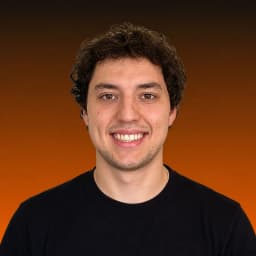
I'm Guglielmo Vaccaro, startup founder and solopreneur. Five products in three years: two I shut down, one I sold, two are alive.

  • 5

    projects launched

  • 2

    running

  • 1

    sold

The short version

  • I stopped studying physics to give startups a hundred per cent of my time.
  • Five products in three years: 21BJ and Sp3llbound I shut down, Bitzuma I sold, Startupage and Calally are alive.
  • Today I build alone and without investors. It's the right call for this phase, not a religion.
  • I work from wherever I want, because this job lets me.
  • Every day I publish a video about what I'm building and what I'm getting wrong.

I never know what to put under occupation

I'm not a developer, though I write code. I'm not a marketer, though I handle distribution. I'm not a designer, though I draw the interfaces. I'm not an analyst, though I read the numbers every day.

I do a bit of everything, and in almost all of it I'm probably worse than someone who only does that one thing. What I am is obsessed with startups: someone with a single fixation, take an idea and drag it into the real world until it has an impact on someone. It's also a principle I kept from the first team: in a small group there are no rigid roles, being the designer doesn't mean you only do design.

What I have built

In order: the live ones first, then the one I sold, then the ones I shut down.

  1. 2023

    Apr 2023

    I leave university

    I stop studying physics to give startups a hundred per cent of my time, and start 21BJ with two childhood friends.

  2. Apr 2023

    21BJ

    Shut down

    Co-Founder · Apr 2023 - Mar 2025

    Fantasy card game for mobile, a casino with no real gambling.

  3. 2024

    Jan 2024

    Chasing the pre-seed

    London, Paris, events across half of Europe chasing a pre-seed that never came. That is where I learned to build a pitch and talk to VCs.

  4. Jun 2024

    Sp3llbound Studios

    Shut down

    CEO & Co-Founder · Jun 2024 - May 2025

    Web3 gaming studio.

  5. 2025

    May 2025

    Bitzuma

    Exited

    CEO & Co-Founder · May 2025 - Oct 2025

    Crypto news, analysis and interviews, published daily.

  6. Oct 2025

    Startupage

    Active

    Solo Founder · Oct 2025 - Present

    The platform connecting founders, investors and talent.

  7. Nov 2025

    The void, then the solopreneurs

    A couple of months stuck, out of tech and with no idea what to do next. Then I found people shipping entire products on their own, and that turned my head around.

  8. 2026

    Mar 2026

    CalAlly

    Active

    Solo Founder · Mar 2026 - Present

    Nutrition tracking you speak to, with a coach guiding you.

What I shut down, and why

21BJ

21BJ came first. A fantasy casino game for mobile with no real betting, in 3D, on Unreal Engine 5. I worked on it for two years with two childhood friends, after leaving university. We got to a team of over twenty people: finding them took between three and four hundred calls. We did London, Paris and events across half of Europe looking for a pre-seed.

It didn't end for one reason, it ended from accumulated inexperience. The product was too big for what we had, and back then there was no AI to compress development costs. Investors raised the bar every round: first the beta, then certain numbers, then others. Meanwhile web3 gaming stopped being funded at all. And our own money was running out, which is the worst part, because when it runs out you make worse decisions. With no round, the promise made to twenty people was not one we could keep.

The whole story

Sp3llbound Studios

Sp3llbound Studios looks like the project that came next, and instead it was born inside 21BJ, while it was still running: a development studio, so we could present ourselves to investors as a house rather than a single game. That's where the first real money arrived: a Taiko grant, a second grant from Immutable, an acceleration with Helika and over a hundred brand partnerships worldwide. Then the sector collapsed, and took studios far bigger than ours with it.

The whole story

Bitzuma

Bitzuma is the one that costs me most to tell, because it didn't end badly. It was a crypto news and analysis outlet, the three of us built it and sold it in five months. A micro exit, and I say that without dressing it up: the satisfaction wasn't the figure, it was seeing how the process works. The revenue was there and the traffic was growing. We closed it because it had been born out of necessity rather than desire, and after two and a half years on the same thing the flame had gone out. Of the three of us, one left tech, one moved to the other side of the table into venture capital, and I stayed to build.

The whole story

I would do it again a hundred thousand times. I could have spent those two years in big tech on a high salary with my evenings free, and I wouldn't trade: that's where I learned what running a company actually means, and everything I can do now I paid for that way.

What I'm building now

Startupage

startupa.ge

Startupage is a platform connecting founders, investors and talent through verified profiles and a marketplace of real opportunities: hiring, co-founder search, open rounds, companies for sale. It came from a problem I lived myself, back when finding useful information in the startup world meant hours spent verifying things nobody had verified.

Calally is a nutrition tracking app you talk to, currently pre launch with testers. Calorie tracking apps make millions and have two big problems. The first is that logging by hand is a pain: you search the database for the food, you fill in the fields, and two weeks later you quit. The second is that nobody gives you any feedback, you record the numbers and that's it. Calally goes after both: describe the meal by voice or text, and a coach guides you with serious parameters, from basal metabolic rate to rates of weight change that actually make sense. So far the coach is the part testers like most.

Neither has taken money, and that is a deliberate choice. Bringing in a VC means having people inside the company who decide alongside you: you answer to them, and depending on how big their stake is they can put decisions on you. I want to run my own things with complete autonomy, without answering to anyone, and that is the whole reason. To be clear though: if you are aiming for a startup that grows extremely fast, a VC isn't an option, it's mandatory.

The challenge I set myself

I want to see how far you get on your own. Not how high at any cost, how far alone: the goal is to build a very profitable company while staying one person, and the constraint is the interesting part.

What makes it possible now and not three years ago is AI, though not for the reason everyone gives. It isn't that I write code faster. It's that the constraint that killed me before was the team: twenty people to coordinate, hundreds of calls, a technical cofounder we didn't have and kept looking for. In the pre AI era a technical founder was mandatory, and that equation has changed. AI as a working partner, on marketing, on user acquisition, on automation, is what lets me do a startup again without doing the team again.

Building alone is still a choice for now, not an identity. I'd like to work in a team again at some point, and the reason I'm not doing it yet is further down.

The whole story

I work from wherever I want

Home is the base, and that suits me fine. The point is a different one: building alone means where you are stops mattering, so when I want to go, I go. Mountains, the coast, a city I don't know. A backpack and a decent connection are enough.

It isn't tourism. It means organising the week around the thing I need to figure out, instead of around a place I have to be at a set hour.

I share everything, mistakes included

Every day I publish a video about what I'm building. What worked and, far more often, what didn't. My best performing series is literally called “stupid things I did during my first startup”, and it is exactly what it sounds like.

I don't sell the dream of the founder who made it. I fail on camera so you can skip that part. It's also why the projects I shut down get the same space on this site as the live ones.

What I don't do

  • No calls. I did between three and four hundred of them to build a team I then had to send home, and my co-founders and I used to compete over who could dodge more of them. Email works better and I actually read it.
  • No consulting. Selling my time by the hour is the fastest way to have none left for the products.
  • No rounds, for now. It isn't a moral position: it's that in this phase I'd rather spend the time on the product than on raising.
  • No income promises and no guru tone. If something didn't work, I write that down.

Work isn't everything, and I say that having tried

After 21BJ, where I held a position of power even if a small one, I understood something about myself: power and big responsibility are not for me. The people who reshaped entire industries gave their whole lives to it, and that's a choice I respect, but it isn't mine. I prefer something smaller and more niche, something I can run on my own without absurd stress. It keeps me saner.

The real fear is reaching fifty without having noticed, with money in the bank and nobody left around. If I've lost all the years of my life and all my friends, what do I do with that money. What counts is nature, adventures, friends, family, my girlfriend, a body that works. Costa Ricans call it pura vida. I train BJJ, I surf, I go into the mountains, I practice historical combat.

I'll state the trade off plainly: if you want to be the next billion dollar unicorn you have to grind in a way I don't feel like grinding. I work a lot, but on my own things and without a toxic relationship with work.

Frequently asked questions

Who is Guglielmo Vaccaro?
An Italian startup obsessive. He stopped studying physics to give startups a hundred per cent of his time. He has built five products in three years: two he shut down, one he sold, two are active, Startupage and Calally. He builds alone and without investors, and shares every stage of the process publicly, failures included.
Why did 21BJ end?
From accumulated inexperience, not from a single cause. The product was too big for what we had, investors raised the bar every round and web3 gaming stopped being funded. With no round we couldn't keep the promise made to over twenty people.
What is Startupage?
A platform connecting founders, investors and talent through verified profiles and a marketplace of real opportunities: hiring, co-founder search, open rounds and companies for sale.
What is Calally?
A nutrition tracking app where you describe meals by voice or text instead of filling in fields, and a coach guides you with evidence based nutritional parameters. It is currently pre launch with testers.
Can you build a startup without investors?
Yes, and in this phase that's what I do. It means growing more slowly and funding yourself from revenue instead of capital, in exchange for control over the product, the timing and the decisions. With an investor you grow faster: it's a trade, not a rule.
Will you always build alone?
No, it's the choice for now and not an identity. With my two co-founders I had total trust, I could have left a million in their account without thinking twice. Finding that again with someone new is extremely hard, and that is exactly why I'm on my own for now. I'd like to work in a team again in the future.
What does building in public mean?
Openly sharing the process, including mistakes, numbers and wrong decisions, instead of showing only the final result.

Get in touch

No calls, no forms. This is the email and I actually read it:

hello@guglielmovaccaro.com

Newsletter

The tools and strategies worth your time, plus what I'm building and what I'm getting wrong. In your inbox.

20k+ people already follow me on Instagram, TikTok and YouTube.

By subscribing you accept the Privacy Policy. No spam, unsubscribe whenever you want.